By Master Chef Muhammad Ameen | Founder & CEO, Skills Valley – Institute of Hospitality Management
As conflict disrupts shipping through the Strait of Hormuz, Pakistan faces a difficult but important question: can it rebuild its place in the international maritime workforce? The answer should not be to send more people into dangerous waters. It should be to use this moment to prepare qualified Pakistani seafarers for safe employment across the global shipping industry.
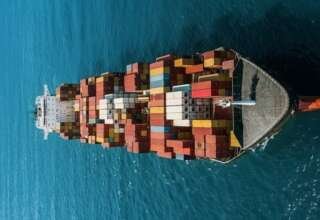
The crisis is serious. On 11 November 2026, the International Maritime Organization (IMO) reported more than 130 verified attacks on internationally trading commercial vessels in and around the Strait of Hormuz since the conflict began on 28 February, with at least 25 seafarers killed. In August, the IMO estimated that up to 400 ships carrying around 6,000 seafarers had been unable to depart the Persian Gulf safely. These are not merely shipping statistics; they represent workers and families facing extraordinary uncertainty.
The disruption has raised questions about crew rotations, recruitment, insurance and the willingness of mariners to accept assignments in high-risk areas. It may encourage shipping companies to diversify their crewing networks. But there is no reliable evidence yet that large numbers of foreign seafarers have abandoned the profession or that Pakistani workers are replacing them. The potential opportunity lies in preparing for changing demand, not in exploiting fear or accepting unacceptable risk.
Pakistan once held a more prominent position in international seafaring. Research suggests that the country has experienced a significant decline in its maritime workforce participation and associated foreign-exchange earnings. Some historical estimates indicate that annual seafarer remittances may have fallen from approximately US$300 million in the early 1990s to around US$50 million in recent years. However, these figures cannot be independently verified through a consistent official statistical record. This lack of reliable data is itself a serious policy concern: Pakistan cannot effectively manage, develop or revive a strategically important employment sector without accurately measuring its performance.
India and the Philippines offer useful lessons. Both have invested in training systems, recruitment infrastructure and international employer relationships. The Philippines also publishes a separate sea-based remittance series, making the contribution of its maritime workforce visible to policymakers. Pakistan needs comparable transparency, alongside credible certification and stronger connections with shipowners and crewing companies.
For Pakistani workers, the opportunity is broader than deck officers and marine engineers. Merchant ships and passenger vessels also need trained cooks, food handlers and other hospitality personnel. A ships’ cook must understand food safety, nutrition, sanitation, multicultural crews and life at sea. This is an area where Pakistan’s hospitality training sector can contribute, provided qualifications and assessment meet applicable international and flag-State requirements.
Pakistan ratified the Maritime Labour Convention, 2006 (MLC 2006), in March 2025, and it entered into force for Pakistan on 14 March 2026. The convention, developed by the International Labour Organization, sets standards for seafarers’ working and living conditions, including food and catering. Pakistan’s Directorate General of Ports and Shipping has also issued guidance on cookery and food-handling certification. These developments should become practical improvements in training, inspection, documentation and worker protection—not simply compliance paperwork.
Unfortunately, prospective seafarers can encounter a complicated pathway from training to documentation and employment. Delays, unclear procedures, uneven quality assurance and weak employer links can discourage candidates and damage confidence. A skilled applicant who cannot obtain recognized documents or a legitimate placement in time is a lost opportunity for both the individual and the country.
What should Pakistan do now? First, the Ministry of Maritime Affairs and relevant regulators should convene a maritime employment task force with training providers, licensed crewing agencies, shipping companies and worker representatives. Its immediate job should be to identify real international vacancies, map certification gaps and monitor risks across different trading routes.
Second, authorities should make seafarer documentation and certificate verification more transparent, predictable and digital. Third, Pakistan should expand independently assessed, employer-linked training for ratings, ships’ cooks and other shipboard service occupations. Maritime English, practical safety training and genuine placement partnerships must be part of the package.
Fourth, Pakistan should create a credible national statistical series on seafarer deployment and remittances. Policymakers need to know how many Pakistanis work at sea, in which occupations, under what conditions and how much income they remit. Without this evidence, ambitious revenue targets remain aspirations rather than plans.
Finally, seafarer safety must be non-negotiable. No Pakistani worker should be pressured to enter a conflict zone because a vacancy exists. Informed consent, lawful contracts, appropriate insurance, security assessments, access to repatriation and respect for internationally recognized protections are essential. The IMO has repeatedly stressed that commercial considerations cannot justify exposing crews to severe danger.
The Strait of Hormuz crisis is a warning about the vulnerability of world trade—and a reminder that maritime labour is a strategic profession. Pakistan cannot control geopolitical events, but it can control the quality of its training, the integrity of its certification, the fairness of its recruitment and the safety of its workers.
If those reforms begin now, Pakistan could become a more dependable supplier of qualified seafarers as global shipping adjusts. The opportunity is not the war itself. It is the chance to build a maritime workforce ready for the future.
Sources for editorial fact-checking
International Maritime Organization, 11 November 2026, “IMO Secretary-General calls on States to enforce maritime rules in the Strait of Hormuz” — https://www.imo.org/en/mediacentre/pressbriefings/pages/imo-secretary-general-calls-for-enforcement-of-maritime-rules.aspx
International Maritime Organization, 28 August 2026, “Six months of uncertainty for seafarers in Strait of Hormuz” — https://www.imo.org/en/mediacentre/pressbriefings/pages/statement-on-the-ongoing-crisis-in-the-strait-of-hormuz.aspx
Directorate General Ports & Shipping, Pakistan, Circular 008/2025 (MLC ratification and entry into force); Circular 007/2025 (cookery and food-handling certification).
Source manuscript: “Decline in Pakistan’s Seafarer Remittance Revenue: A Comparative Analysis with India and the Philippines,” supplied by author. Historical Pakistan estimates have not been treated as independently verified.