
Agentic AI is evolving from a support tool into a co-worker that can reason, act, and execute multi-step tasks. The MENA region is well-positioned for this shift due to its high service standards and national digital transformation agendas. The UAE already reports one of the world’s highest AI adoption rates, with 62% of organisations using AI in at least one function. In this climate, companies like Yango Tech are shaping how agentic systems operate in real enterprise environments, setting the stage for five trends that will define 2026.
- Voice becomes the front door for services
Voice is gaining traction because it mirrors how people naturally communicate and reduces friction in service-heavy environments. The UAE’s linguistic mix makes this especially important, with customers shifting between Arabic and English and expecting tone and formality to feel culturally accurate. Organisations are adopting AI agents that interpret these cues and adjust language and intent in real time. Early uptake will come from banking, aviation, hospitality, government services, and insurance, where trust and speed matter most. As voice becomes a primary interface, conversational quality will be treated as a core element of customer experience. - Government builds AI into its foundation
The UAE’s Digital Government Strategy is pushing public services toward greater speed, accuracy, and accessibility, accelerating the need for next-generation automation frameworks. Agentic AI is handling multi-step workflows that once required large teams, from citizen inquiries and document reviews to policy analysis and simplifying access to institutional knowledge. AI-driven search cuts document retrieval time by up to three times, while automated review systems reduce processing from days to minutes. As volumes rise across permits, licensing, and social services, governments are prioritising scalable, accurate systems. This marks a shift from reactive service delivery to proactive, data-driven operations that anticipate citizens’ needs. - Healthcare adopts agents for clinician efficiency
Healthcare systems need faster decisions without compromising accuracy, yet only about three per cent of healthcare data is effectively used because legacy systems struggle to process multi-modal information at scale. Agentic AI helps close this gap by validating referrals, transcribing visits, summarising patient histories, checking diagnoses, and surfacing clinical trends with full auditability. These capabilities reduce manual data handling and free clinicians to focus on care. AI review tools have already cut processing times from days to hours, and hospitals are now adopting agents that deliver consistent, scalable workflows across high-volume cases. - Retail and logistics accelerate autonomous operations
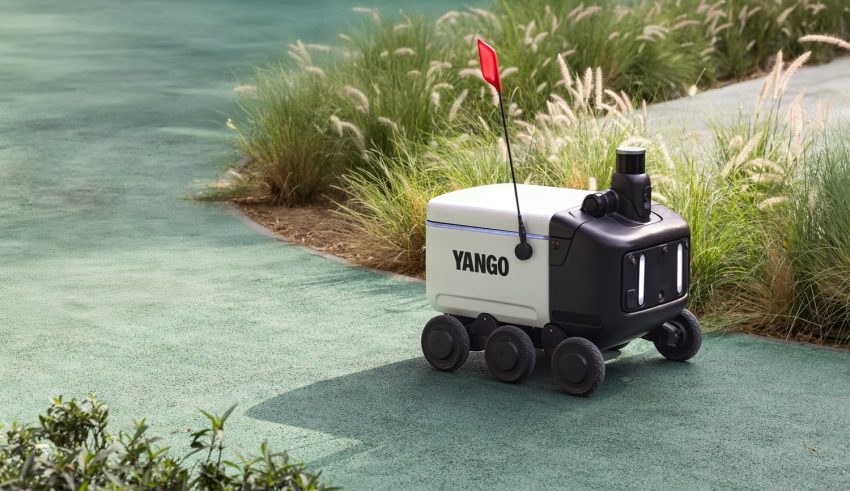
With the MENA retail market expected to reach $1.4 trillion by 2032, retailers face growing pressure for faster replenishment, precise stock management, and accurate delivery windows. Agentic AI supports these needs by autonomously forecasting demand, adjusting orders, coordinating replenishment schedules, and optimising pricing. Offline retailers are also adopting computer vision to track shelves and reduce stockouts, while e-commerce operators integrate agents into last-mile routing and warehouse planning. RouteQ, a Yango Tech solution, has demonstrated how AI can improve fleet utilisation by up to 20% and reduce fuel usage by 15%. These shifts signal the rise of autonomous retail and logistics environments that adapt continuously to real-time conditions. - High-compliance sectors accelerate agentic AI adoption
Financial services, energy, and utilities operate in environments where accuracy and compliance are central to performance. In financial services, AI assistants support onboarding, compliance workflows, anti-fraud monitoring, credit decisioning, and tailored customer advisory, helping institutions meet regulatory expectations while improving efficiency. In energy and utilities, predictive maintenance, grid optimisation, and autonomous monitoring are becoming standard, with agents analysing real-time data to anticipate failures, manage consumption, and maintain service reliability. These sectors are prioritising agentic systems for consistency at scale, where precision is non-negotiable.
Organisations across the region are beginning to pair human judgement with AI-driven execution, creating faster and more resilient workflows. As 2026 approaches, the companies that act early will set new benchmarks for service quality and operational efficiency across the GCC.