
By Rafiq Vayani
DUBAI: Colliers’ UAE Real Estate Market Report for 2025 highlights a defining year characterised by exceptionally strong transactional activity, sustained developer confidence and policy-backed market growth. Whilst all Emirates recorded positive performance, Abu Dhabi emerged as a clear standout, supported by record sales volumes, rising end-user participation and growing international investor interest. The report provides insight into key residential, office and investment trends across Abu Dhabi, Dubai, Al Ain and the Northern Emirates.
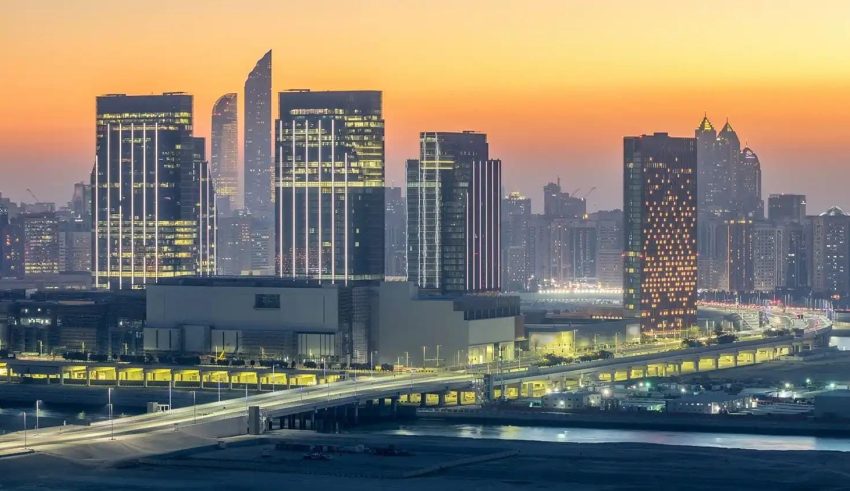
Abu Dhabi Residential and Office Market: Abu Dhabi delivered one of its strongest residential market performances on record in 2025, supported by a sharp increase in transactional volumes and values across both completed and off-plan properties. Off-plan sales accounted for a growing share of activity, with 15,000 transactions (up 60% Y-o-Y). Completed unit sales reached nearly 6,000 (up 28% Y-o-Y), reflecting strong developer confidence and robust buyer appetite across a broad range of price points. In total, transactions exceeded 21,000 units, with completed property sales remaining resilient, highlighting sustained end-user demand and reinforcing market depth.
Abu Dhabi also recorded a highly active year for residential supply with 7,000 units added in 2025. This momentum was complemented by record-breaking launch volumes, signalling renewed developer confidence in the capital. Construction activity was further supported by the recommencement of several previously on-hold projects, particularly within established communities such as Al Reem Island.
The year also saw the highest concentration of branded and lifestyle-led development launches to date, many reaching sell-out status shortly after release. Separately, Abu Dhabi’s housing authority announced approximately 40,000 housing units and residential plots for UAE nationals.
Leasing activity remained firmly positive, with high occupancy levels maintained across the Investment Zones. Rental growth was recorded across all residential segments. Prime and high-end apartments increased by 10% to 25%, depending on the community, while mid-quality apartments also saw notable growth, of 7% to 35%. The villa segment recorded average increases of 5% to 10% overall, with prime communities outperforming at 10% to 15%.
Residential supply is expected to remain positive, with 7,000 units scheduled for completion. Sales prices are forecast to maintain an upward trajectory, supported by off-plan dominance, premium positioning and disciplined market growth.
The office market recorded its strongest performance in over a decade, driven by limited availability of premium space, corporate expansion and rising demand for flexible, high-quality workplaces. Several Grade A assets approached full occupancy, including Aldar’s Quartz Tower.
The sector also moved into a new delivery cycle, with Aldar expanding Abu Dhabi Business Hub by 175,000 sqm and launching Yas Business Park, adding 47,500 sqm across four buildings. Additional Grade A stock is scheduled for completion in 2026, including The Link and Masdar City Square. Together these will deliver approximately 80,000 sqm of new space.
Dubai Residential and Office Market: Dubai remained a global focal point for real estate activity, recording the highest volume of residential completions in its history during 2025. The off-plan segment continued to underpin sales activity, supported by a steady flow of new launches and increasingly flexible payment structures. Well-positioned and competitively priced projects continued to perform strongly, while less established developments added incentives to sustain absorption.
Dubai delivered approximately 37,950 apartments and 9,700 villas in 2025. Whilst handovers fell modestly below earlier projections, annual output remained substantial and represented the highest residential delivery volume on record, reflecting the depth of the development pipeline and the continued expansion of master-planned communities. Development activity remained broad-based, supported by ongoing infrastructure investment and sustained end-user and investor demand, encouraging developers to progress multiple schemes in parallel. Despite operational constraints, developers increasingly adopted innovation, modular construction techniques and phased handover strategies to manage risk and maintain momentum. Residential supply is forecast to rise materially in 2026, with over 90,000 units currently scheduled for completion.
In the rental market, growth moderated as affordability considerations became more prominent. The introduction of the Smart Rental Index in early 2025 played a pivotal role in guiding renewal negotiations, enhancing transparency and supporting a gradual stabilisation of rental growth. Tenant behaviour became more value-driven, with a clear preference for upgraded, well-managed units.
The office sector continued its growth phase, characterised by substantial increases in demand, increasing occupancy levels and rental rates, particularly for Grade A and well-located assets. Commercial supply was limited in 2025, with less than 280,000 sqft of office space delivered, reinforcing the broad undersupply of stock. However, new supply is expected to pick up significantly in 2026 with approximately 1.7 million sqft of office space anticipated for handover, supporting occupiers seeking modern, efficient workplaces and sustaining Dubai’s competitiveness as a regional business hub.
Al Ain and Northern Emirates Market: Across the Northern Emirates, 2025 saw accelerating development momentum and rising investor interest. A growing pipeline of residential, hospitality and mixed-use projects reflect improving confidence in the region’s long-term prospects, supported by government initiatives, infrastructure investment and tourism growth. Sharjah and Ras Al Khaimah continued to anchor activity, while Ajman recorded improving traction among both end-users and investors, supported by competitive pricing and improving project quality.
Rental markets continued to benefit from value-driven relocations, while sales activity deepened further, supported by an expanding buyer base and the increasing prominence of lifestyle-led and branded developments. Residential launches accelerated during the year, reflecting rising investor confidence, improving infrastructure provision and the increasing depth and credibility of master-planned development in RAK and Sharjah. Residential supply across the Northern Emirates is expected to become increasingly visible in 2026, as a growing number of developments transition into active handover phases. Approximately 12,900 residential units are forecast for completion, with delivery activity primarily concentrated in Sharjah (55%), followed by RAK (25%) and Ajman (20%).
The Al Ain market transitioned into a renewed but measured growth phase, with upward momentum recorded across all asset classes. Apartment rentals emerged as the primary growth driver, reflecting improving occupancy levels, gradually strengthening tenant demand amidst limited near-term supply additions. In the commercial sector, higher-quality assets have contributed to gradual rental uplift, supported by an emerging trend of occupiers relocating and upgrading into larger, better-specified office spaces, reflecting improving business confidence and evolving operational requirements.
Several major policy initiatives and strategic announcements underpinned market confidence in the UAE throughout 2025. These include the continued implementation and adoption of formal rental index frameworks in Abu Dhabi, Dubai and Sharjah, the launch of Dubai’s First-Time Home Buyer Program in July 2025, ongoing housing initiatives in Abu Dhabi, continued regulatory reforms, digitalisation of transactions, and confirmation that Etihad Passenger Rail services are scheduled to commence operations in 2026.