News Desk
KARACHI: A conference on climate change themed as Green Minds, Greener Schools held at JS Auditorium, IBA brought together educators, students, policymakers and environmental leaders in a powerful call to action for climate literacy, sustainable development and youth leadership.
Organized by Pakistan Academic Consortium (PAC) in collaboration with Directorate of Inspection & Registration of Private Schools (Govt. of Sindh) and Aga Khan University Examination Board, the conference provided a platform for over 400 participants, including school heads, teachers and students from leading educational institutions across Karachi equipping next generation with knowledge and leadership skills needed to combat climate change.
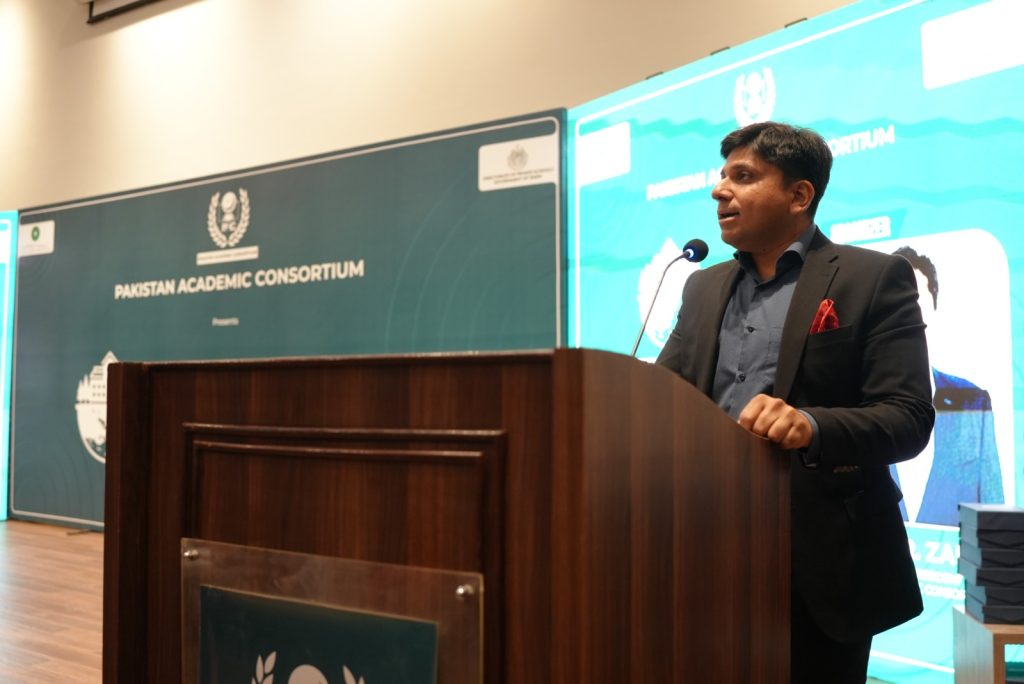
In welcome address, Nasir R. Zaidi, Founding President PAC emphasized the critical role of education in addressing climate change. “Climate literacy is not just an academic subject; it is a necessity for survival, he stated. “Our schools must serve as incubators of sustainability, where students not only learn about climate change but also take meaningful action. We are working on climate change curriculum which will benefit students at large”, said Ambreena Ahmed, Director TRC.
Co-host of the event Rafia Mallah, Additional Director DIRPIS stated “we are not just talking about the environment – we are empowering young minds to be the leaders of change” followed by inspiring keynote by Miriam Kugele, Director of Environment & Sustainability at Aga Khan University, who emphasized upon the urgency of integrating climate education into school curricula. She highlighted that educators play a pivotal role in fostering environmental consciousness among students, ensuring that knowledge translates into action.
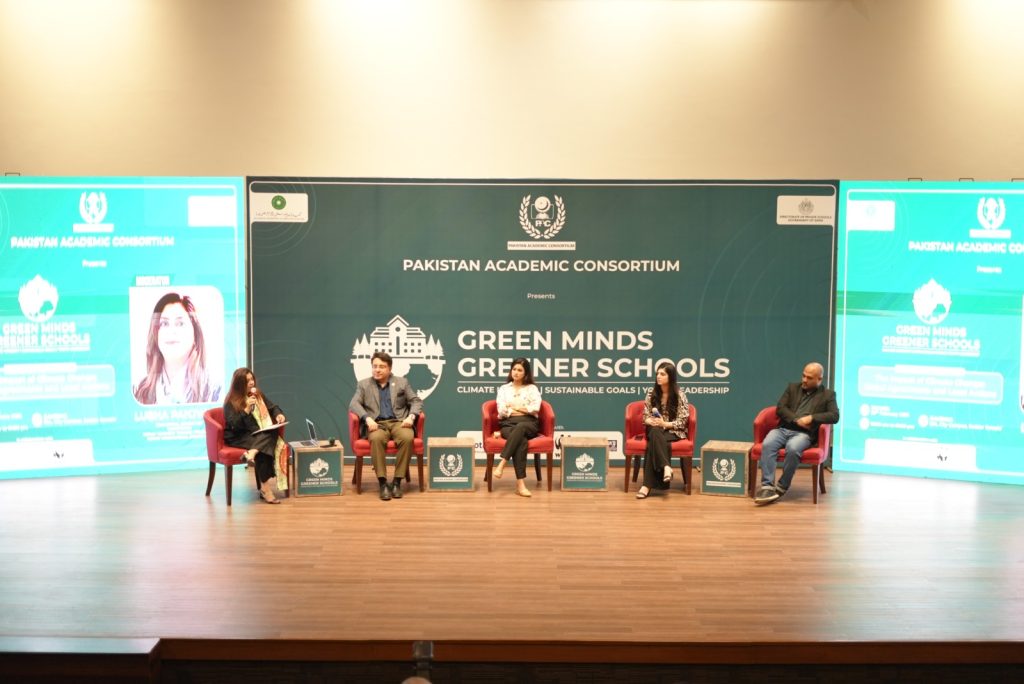
A thought-provoking panel discussion on “The Impact of Climate Change: Global Agreements & Local Actions” featured distinguished experts including Dr. Farhan Essa Abdullah (CEO – Dr. Essa Laboratory), Rinam Fatima (Head – Southern Region, WWF Pakistan), Sidra Qumar (CEO – IU Schooling System) and Ahmed Shabbar (CEO – GarbageCAN). Moderated by Lubna Panjwani (Chairperson Rotary Teachers’ Training Programme), the panel delved into global climate policies, local sustainability efforts and the importance of community-driven initiatives.
The main highlight of the event was school presentations from participating institutions, where students showcased their research, innovative solutions and presentation centered around sustainability. Topics ranged from ocean conservation, sustainable living, biodiversity protection and climate change mitigation strategies. Shoaib Siddiqui, Dean of Generations’ College delivered an insightful talk titled “The Paradox of Climate Change Education”, stressing that awareness alone does not drive change—practical application and behavioral shifts are key to making a real impact.
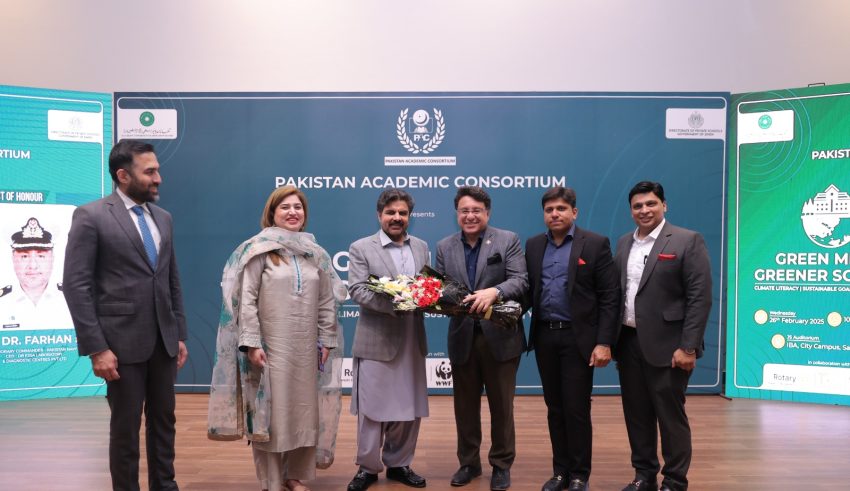
The conference was graced by Mr. Zahid Ali Abbasi, Secretary School Education & Literacy Department (Govt. of Sindh), who emphasized Sindh government’s commitment to incorporating climate education into school policies and fostering eco-friendly initiatives across public and private institutions. During Closing Ceremony, Chief Guest Nasir Hussain Shah, Minister for Local Government (Govt. of Sindh) delivered a powerful address, reinforcing the need for collaborative efforts between the government, private sector and academia in combating climate change. “Our children are the future custodians of this planet. It is our duty to empower them with the right education and tools to make sustainable choices,” he stated.
The masters of the ceremony were Fahad N. Siddiqui (General Secretary PAC) and Arsalan Faruqi (Sr. Vice President PAC). It concluded with a ceremonial awards and memento distribution recognizing the contributions of participating schools, speakers and environmental advocates.
This climate change conference marked a significant milestone in promoting climate literacy and student-led environmental action in Pakistan. As students departed, they carried not only refreshments but also a renewed sense of purpose – to be champions of sustainability in their communities.
rafiq@biztoday.news