
By Rafiq Vayani
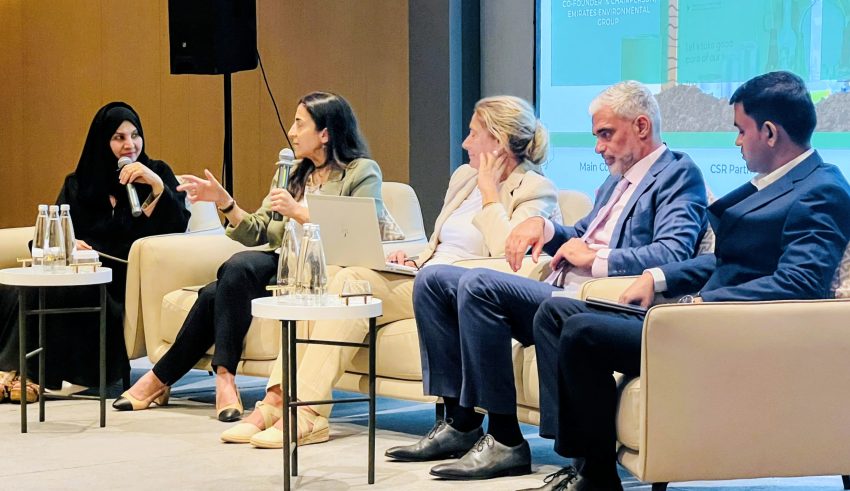
DUBAI: Emirates Environmental Group (EEG) successfully hosted its 2nd Panel Discussion of 2026, titled “Decarbonising Packaging: Life Cycle Assessment (LCA), Carbon Footprint, Innovation and Climate-Neutral Strategies.” The session convened policymakers, industry leaders, sustainability experts, academicians and youth to examine pathways for reducing packaging-related emissions and advancing climate-aligned, circular packaging systems.
As global climate commitments intensify, the discussion addressed the growing recognition that packaging represents a significant contributor to Scope 3 emissions across manufacturing, retail and consumer goods sectors. The panel explored how life cycle thinking, data-driven assessment and innovation can guide meaningful emissions’ reductions across the full packaging value chain; from material extraction and production to use and end-of-life management.
In her opening address, Dr. Habiba Al Mar’ashi, Co-Founder and Chairperson of EEG, emphasised that packaging is more than a functional necessity; it is a critical component of global supply chains and environmental stewardship. She also highlighted that Life Cycle Assessment (LCA) and carbon foot-printing are essential tools for identifying emissions hotspots, enhancing resource efficiency and ensuring that climate-neutral strategies are measurable and credible. She further noted that innovation, digital tools, policy support and cross-sector collaboration are vital to transforming packaging systems into sustainable, climate-resilient and socially responsible models.
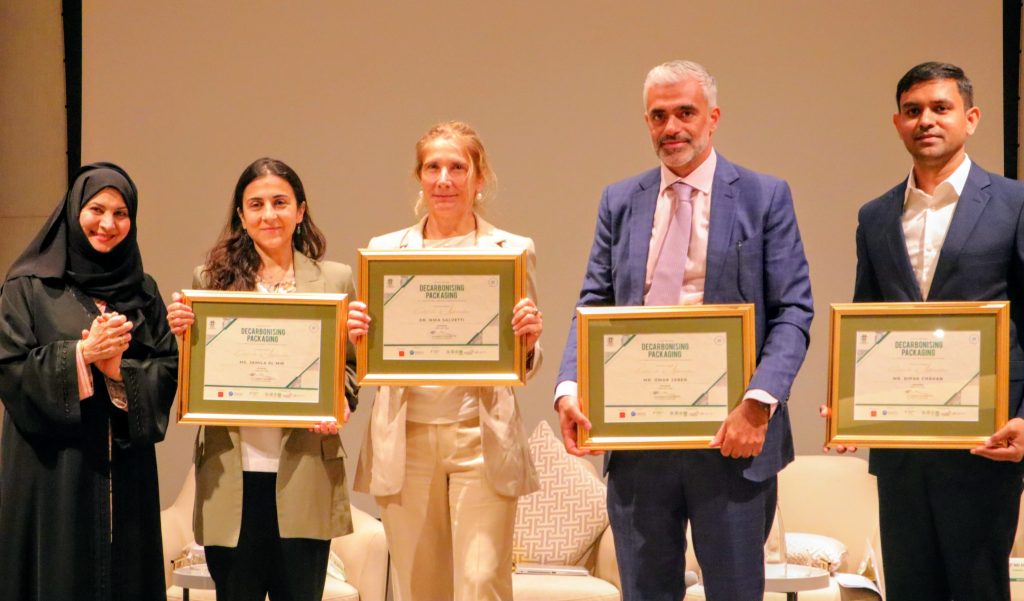
The event commenced with expert panels featuring Ms. Jamila El Mir, Strategy Advisor from Dubai Environment and Climate Change Authority (DECCA), Dr. Nika Salvetti, Visiting professor at Heriot-Watt University Dubai, Mr Omar Jaber, Regional Manager Legal and Sustainability Middle East and North Africa at CANPACK Middle East and Mr. Deepak Chavan from Napco National.
This expert panel examined the technical, regulatory, market and design dimensions of decarbonising packaging. Panellists explored how LCA-based assessments can support informed decision-making, guide low-carbon material choices and strengthen transparency in sustainability reporting.
Discussions also focused on innovations in material science, circular design, recycling infrastructure and advanced technologies, including digital carbon accounting tools and supply-chain traceability systems.
Speakers highlighted that while innovation offers significant opportunities, decarbonised packaging also depends on robust waste management systems, investments in recycling capacity, harmonised standards and supportive policy frameworks, including Extended Producer Responsibility (EPR). The credibility of climate-neutral claims, panellists stressed, must be underpinned by measurable reductions, transparent accounting and alignment with international best practices. Panellists also emphasised the importance of collaboration among governments, manufacturers, brands, academia and researchers to scale low-carbon packaging solutions and strengthen regional leadership in sustainability.
An engaging Q&A session followed, enabling participants to interact directly with speakers on implementation challenges, regulatory readiness, innovation pathways and strategies for building climate-neutral packaging portfolios aligned with global standards.
Reflecting on the session, Dr. Habiba Al Mar’ashi stated: “Decarbonising packaging is a critical component of climate action and sustainable production. By applying life cycle assessment, fostering innovation and strengthening collaboration across value chains, we can ensure that packaging solutions contribute meaningfully to emissions reduction and long-term environmental resilience. EEG remains committed to advancing informed dialogue and actionable pathways that support climate-neutral strategies.”
The discussion reinforced the importance of data-driven approaches, policy coherence and long-term investment in enabling scalable decarbonisation. Participants agreed that transforming packaging systems is essential not only for emissions reduction but also for enhancing material efficiency, competitiveness and sustainable economic development.
This impactful session was made possible through the valued support of McDonald’s UAE, the Main Contributor, whose unwavering commitment to EEG’s programmes and activities continue to strengthen national climate dialogue platforms. Holiday Inn & Suites Dubai Science Park, as the Venue Host, provided an exceptional setting that elevated the professionalism and ensured seamless hospitality for all participants.
The panel was further reinforced by the continued partnership of EEG’s collaborators —the Emirates Green Building Council, the Clean Energy Business Council, the Swiss Business Council, Capital Club Dubai and the CSR Partner – the Arabia CSR Network.
Their support reflects a shared dedication to advancing environmental stewardship, promoting informed climate discourse and fostering cross-sector collaboration that drives meaningful and long-term impact.
This impactful session marked another important milestone in EEG’s 2026 panel discussion series, further strengthening its role as a platform for advancing sustainability leadership, informed climate discourse and cross-sector collaboration.