
By Rafiq Vayani
DUBAI/KARACHI: The Council of Palm Oil Producing Countries (CPOPC) concluded a mission to Karachi, reaffirming b with Pakistan as a strategic Asian palm oil market and underscoring Asia’s growing influence on global demand, market stability, and food security. The delegation met government, industry, and diplomatic stakeholders to discuss market dynamics, supply-chain resilience, and global edible oil trends, highlighting Pakistan’s role as a leading importer shaping regional trade flows.
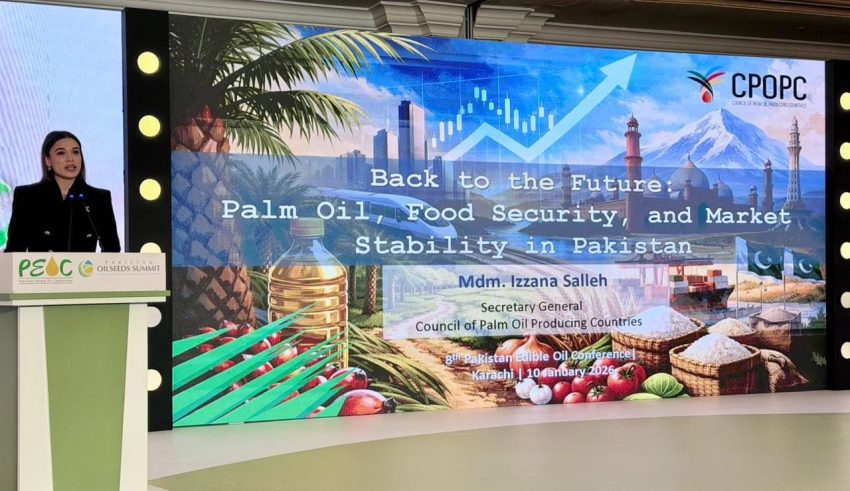
A key highlight was CPOPC Secretary General Madam Izzana Salleh’s address at the 8th Pakistan Edible Oils Conference (PEOC 2026). She emphasized that Pakistan—consuming about 4.3% of global palm oil and importing ~3.3 million tonnes annually—is a strategic partner influencing price stability, food security, and long-term market direction, alongside India and China. Asia’s dominance was underscored by import shares of India (18%), China (11%), and Pakistan (9%), together accounting for nearly 40% of global imports, surpassing traditional markets such as the EU.
The Secretary General highlighted palm oil’s critical role in Pakistan’s food system, supplying over 50% of edible oil needs and accounting for 70–75% of total consumption, particularly in ghee and cooking oil. As the most affordable option, palm oil supports households and SMEs—key in a price-sensitive economy where SMEs contribute ~40% of GDP and 25% of exports—and is vital to food security amid global volatility.
On sustainability, she stressed a shift from compliance to contribution, advocating inclusive approaches that support food security and supply reliability, recognize national standards, and assist smallholders. While certified sustainable palm oil exceeds 20% of global supply, avoiding new trade frictions is essential. Pakistan’s five-decade partnership with producing countries exemplifies balancing sustainability, affordability, and stability through trust and transparency.