

News Desk
KARACHI: Pakistan is confronting growing water scarcity, climate variability, and increasing pressure on its agricultural systems. Despite the scale of these challenges, the complexity of water governance, infrastructure, and climate risks often remains underreported or insufficiently understood by the wider public. Strengthening informed and evidence-based journalism is therefore critical to improving public awareness and supporting sound policy discourse.
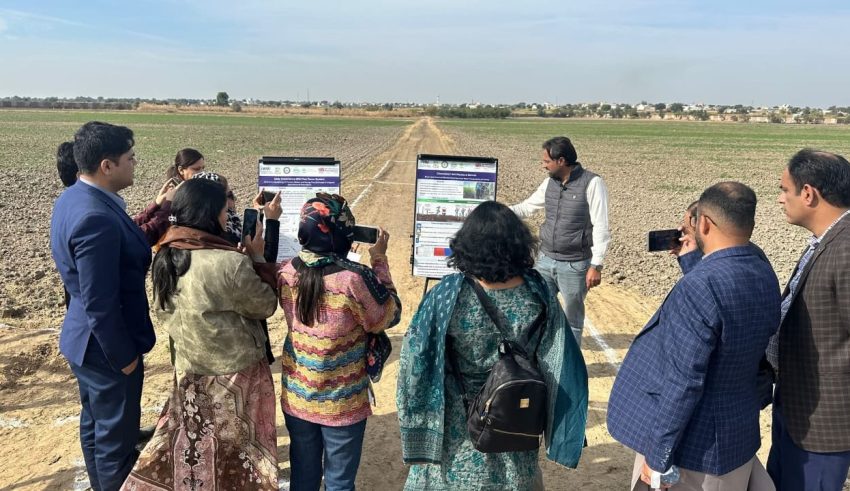
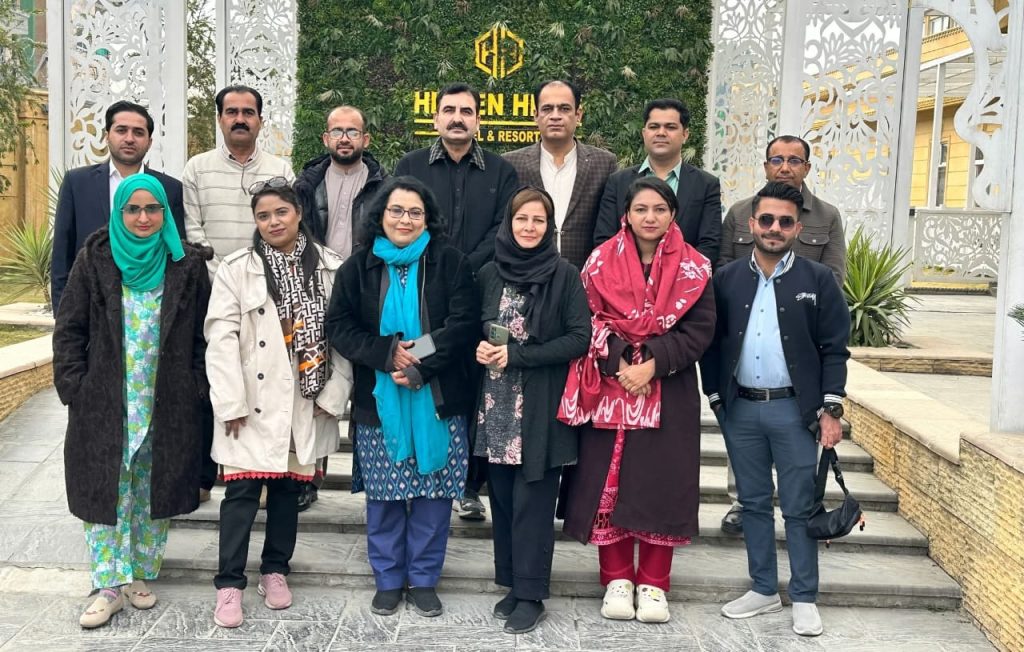
To address this gap, a media exposure visit for environmental journalists from Balochistan and Sindh, was organized under the Water Resource Accountability in Pakistan (WRAP) programme, alongside the Environmental Journalists Quarterly Meeting (EJQM). The initiative combined technical briefings with field visits, enabling environmental journalists to gain first-hand insight into Pakistan’s water challenges, observe on-ground interventions, and engage directly with communities benefiting from innovative water and agricultural solutions.
During the press briefing, Dr. Muhammad Ashraf, Country Representative (Pakistan), International Water Management Institute (IWMI), provided an overview of Pakistan’s water resources and key sectoral challenges. He highlighted that Pakistan operates the world’s largest contiguous irrigation system, comprising three major reservoirs, 45 main canals, and a command area of approximately 17 million hectares.
Groundwater, the country’s fourth-largest freshwater reserve globally, supplies around 90 percent of domestic water needs, 100 percent of industrial demand, and nearly 60 percent of agricultural requirements. Rainfall varies significantly across the country, from 200 to 1,000 mm annually, with nearly 40 percent of cultivated land dependent on rainfed agriculture.
Dr. Ashraf highlighted major development challenges facing the water sector, including growing water scarcity, recurring floods inadequate storage capacity, and reservoir sedimentation of approximately 0.2 million acre-feet annually. He also pointed to the untapped potential of hill torrents, estimated at 18 million acre-feet, alongside systemic inefficiencies where overall water-use efficiency remains below 40 percent. Additional concerns include groundwater depletion and degradation, disposal of nearly 10 million acre-feet of drainage effluent, and increasing challenges around wastewater use and disposal.
Placing these challenges in a global context, Dr. Ashraf outlined IWMI’s vision and mission to advance global water security, emphasizing science-driven solutions, partnerships, and policy engagement. He briefed journalists on IWMI’s Strategic Framework 2024–2030, which focuses on water security, climate resilience, sustainable agriculture, and inclusive development. He also highlighted IWMI’s long-standing footprint in Pakistan, its scientific priorities in areas such as irrigation modernization, groundwater governance, climate-smart agriculture, and digital water intelligence, as well as several ongoing initiatives supporting national and provincial stakeholders.
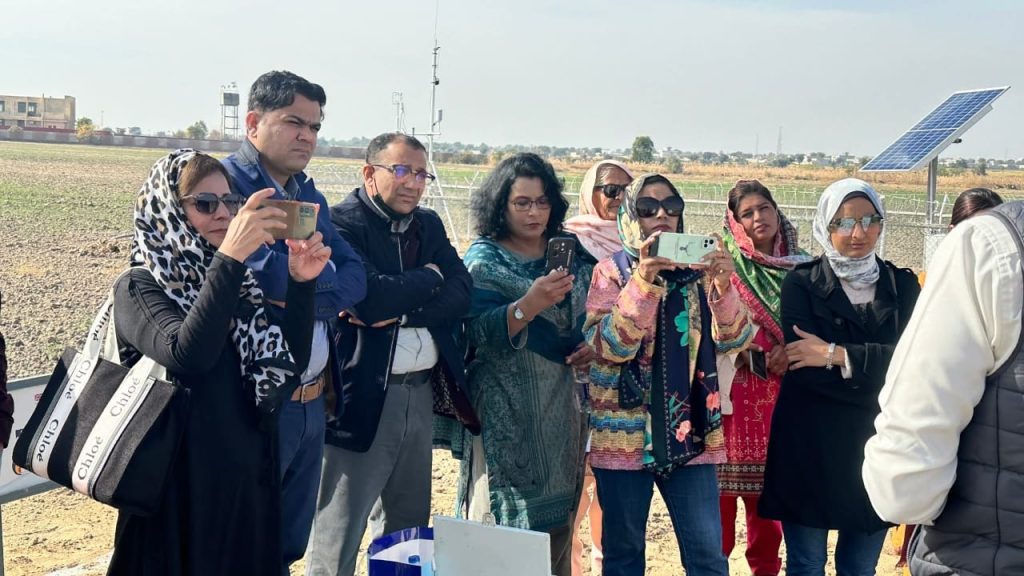
The briefing was complemented by field visits to project sites in Chakwal and Mansehra, where the journalists met with farmers using soil moisture sensors to make informed irrigation decisions, allowing them to irrigate only when crops actually require water. This has helped reduce over irrigation, conserve water, lower pumping-related energy costs, and improve overall crop productivity and farm incomes. In Mansehra, they observed a hydraulic ram pump system delivering water uphill using natural gravity and pressure, without external energy input. The system has improved water availability for livestock, reduced the time burden on women and girls, enabled sprinkler irrigation at farmers’ fields, and supported small, terrace-like kitchen gardens cultivated by both female and male farmers for daily household consumption.
The media exposure visit was designed around the principle that seeing is believing. By observing interventions firsthand, engaging with beneficiaries, and participating in technical briefings, journalists are able to independently assess project outcomes and report in their own language and narrative style, bringing authentic community perspectives to the public and policymakers.
Highlighting the technology-driven outcomes of the Water Resource Accountability in Pakistan (WRAP) programme, Dr. Muhammad Ashraf, said, “Through the Water Resource Accountability in Pakistan programme, IWMI is introducing practical, field-level technologies that directly support farmers and inform policy whereas the soil moisture sensors are helping farmers irrigate at the right time, improving water-use efficiency and crop performance. The advanced monitoring systems such as eddy covariance flux towers and CTD divers are generating high-quality data for researchers, academia, and policymakers, enabling accurate measurement of water, carbon, energy fluxes and strengthening the evidence base for climate policies and targeted interventions.”
The successful conclusion of the media exposure visit and EJQM reaffirms the value of sustained collaboration between development institutions and the media to ensure that Pakistan’s water challenges, and their solutions, are communicated clearly, credibly, and independently.