
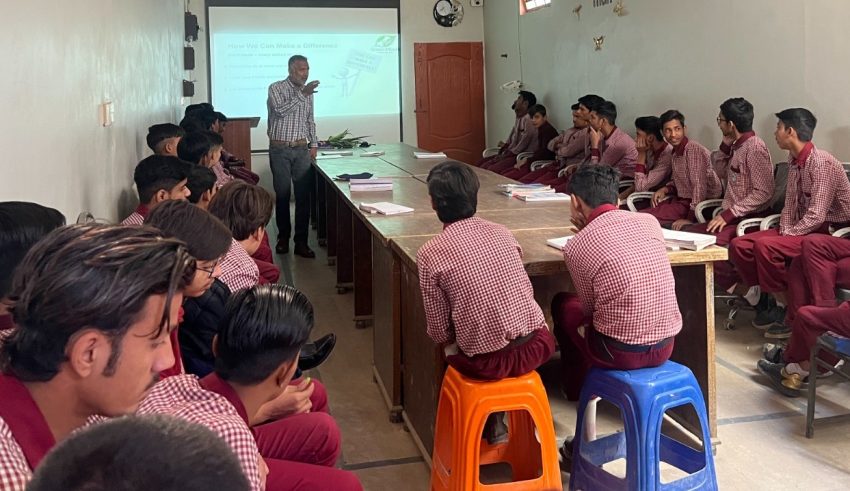
The excessive use of chemical fertilizers and pesticides has severely contaminated food, resulting in the spread of serious diseases among children and youth. These views were expressed by Abdul Wali Khan, Founder and Lead Trainer of Green Minds Pakistan, while addressing students during a three-week Environmental Awareness Workshop Series held at AK Schooling System, Landhi.
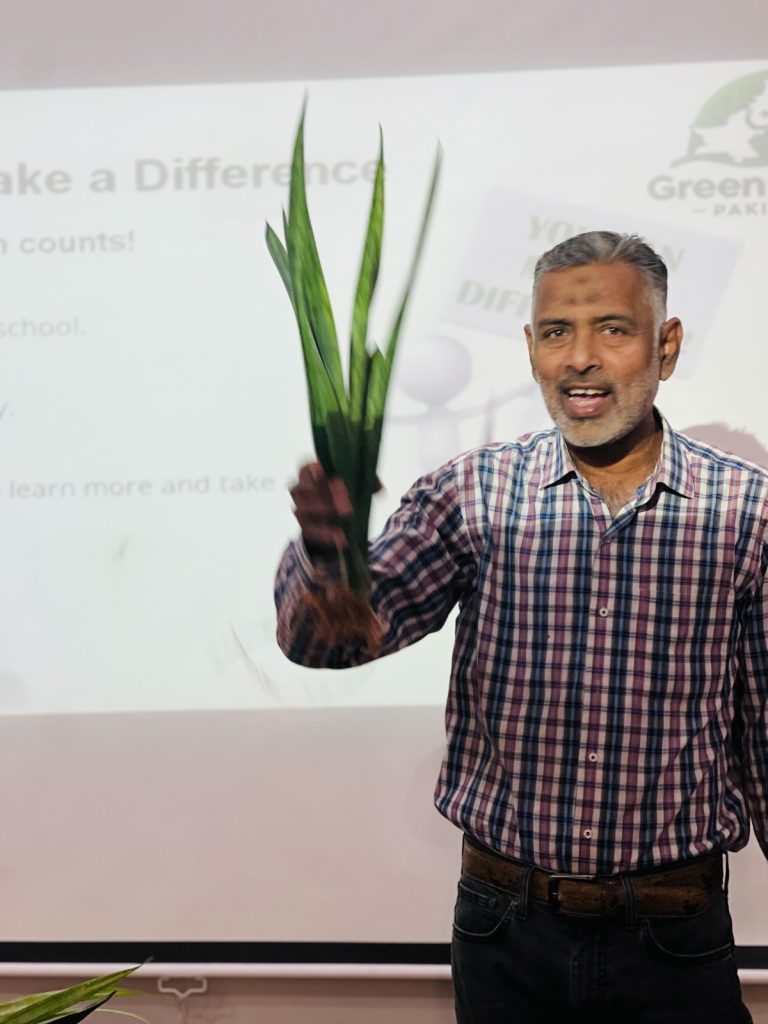
During the sessions, students were educated on environmental protection, cleanliness, tree plantation, waste management, and the importance of understanding and adopting natural and sustainable farming systems. Abdul Wali Khan emphasized that environmental protection is not a Western agenda but an integral part of Islamic teachings. He cited the sayings of the Holy Prophet Muhammad (PBUH), which encourage avoiding wastage of water, planting trees, and maintaining cleanliness.
The three-week workshop series engaged students of Grades IX and X, focusing not only on awareness but also on encouraging practical action. Participants were informed that the widespread use of pesticides and chemical fertilizers has made food toxic, posing serious health risks, particularly to children and young people.
In this context, students were encouraged to adopt sustainable and natural farming practices. It was highlighted that the concept of natural farming is led by Dr. Asif Sharif, whose stance is that healthy food free from toxic chemicals is essential for a healthy society. Students were briefed that natural farming is not only safe but also beneficial for soil, the environment, and human health, as it avoids chemical inputs and helps restore the land’s natural balance.
As a result of the training, students pledged to keep their school environment clean, reduce littering in surrounding areas, and actively participate in tree plantation. They also committed to proper waste disposal, which is being regarded as a major achievement of the workshop.
In the concluding session, Green Minds Pakistan presented saplings to the school, reinforcing the importance of trees. Students were urged to plant at least one tree annually to contribute to mitigating pollution, climate change, and rising global temperatures.
During the workshop, it was revealed that many students previously did not consider burning garbage to be harmful; this misconception was addressed and corrected. The students’ keen interest, active participation, and commitment to practical steps demonstrated that with proper guidance, the younger generation is fully capable of adopting environmentally responsible behavior.
Green Minds Pakistan reaffirmed its commitment to continuing such awareness initiatives in the future to bring positive and sustainable change in society.